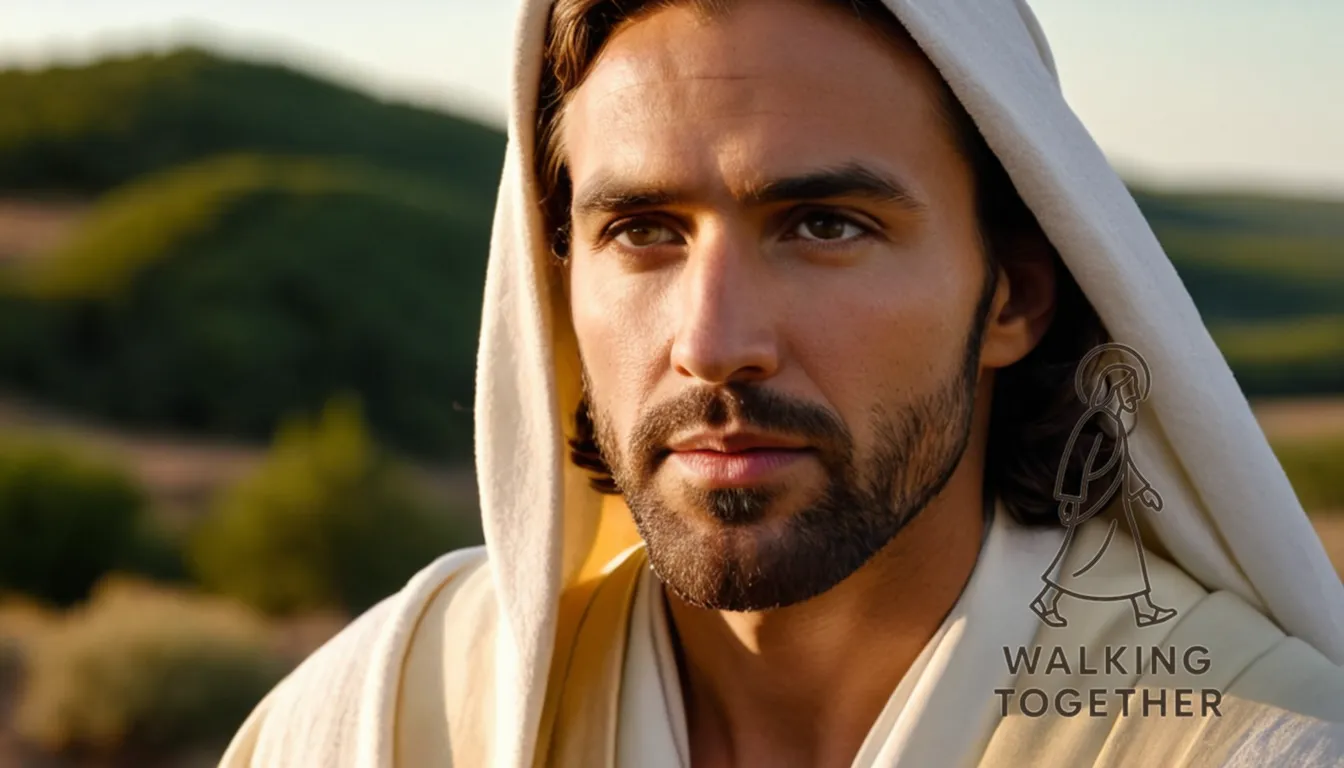
Beyond the Veil: how can you see Jesus in a fractured world?

My heart aches with the spiritual blindness I see around me, because once I was lost, frantically searching for solace in hollow promises, desperately asking myself: how can you see Jesus when all you feel is an echoing void? This isn’t a question for dusty altars or hushed libraries; it’s a primal scream from the soul, echoing in the deafening silence of a world desperate for something real, something more than fleeting likes and manufactured comfort. It’s not about what you believe you should see, but what you can feel, what you can experience, what moves you to your core in this messy, beautiful, broken human existence
It’s not about what you believe you should see, but what you can feel, what you can experience, what moves you to your core in this messy, beautiful, broken human existence. A search for meaning often leads us towards figures who embody compassion and connection, those who bridge the gap between physical and spiritual well-being. Dr. Jesus Abreu, a name invoking both personal and divine resonance, dedicated his life to healing on multiple levels. Doctor Jesus Abreu serves as a powerful example of this intertwining, offering a glimpse into the multifaceted nature of human experience.
.
The Unseen Scars of Modernity
We live in an age of hyper-visibility, yet we are profoundly blind. Our screens illuminate every curated moment, every manufactured joy, every filtered sorrow, but they cast long, isolating shadows over the very essence of human connection. We are drowning in information, yet starving for wisdom. We crave authenticity, yet present meticulously crafted versions of ourselves. This constant performative existence leaves us profoundly disoriented, making the search for anything truly divine feel like grasping at mist. How can one discern the subtle presence of the sacred amidst the clamor of a thousand notifications? The unseen scars of modernity are not physical, but etched deep within our spirits: a pervasive anxiety, a gnawing loneliness, a cynicism born from constant disappointment. These are the barriers, the thick fog that obscures the very possibility of seeing anything beyond the immediate, the tangible, the self-serving. It’s in this landscape of spiritual exhaustion that the question of how to perceive a figure like Jesus becomes not just theological, but an urgent existential quest. It forces us to confront our own internal landscape, cluttered with distractions and pre-judgments, before we can even begin to look outward with new eyes. We have traded genuine empathy for performative outrage, deep thought for shallow soundbites, and enduring purpose for transient pleasure. This trade-off has left a spiritual deficit, a longing that no amount of external validation can fill. The yearning remains, a testament to an intrinsic need for something transcending the material, something that speaks to the deepest parts of our being.
Echoes in the Digital Abyss
The digital abyss, vast and alluring, promises connection but often delivers isolation. We scroll past suffering with a flick of the thumb, offering fleeting thoughts and prayers that evaporate into the ether. Compassion becomes a trending hashtag, and solidarity a profile picture filter. In this echo chamber of curated realities, where does genuine love reside? Where do we find the raw, unfiltered humanity that Jesus championed? He walked among the outcasts, touched the lepers, broke bread with the marginalized. He didn’t just observe suffering from a distance; He immersed Himself in it, becoming the suffering. But in our sanitized, digital lives, we’ve erected walls between ourselves and the messiness of real pain. We’ve learned to intellectualize empathy, to debate charity, to analyze faith, rather than to live it. This detachment is a profound barrier. To ask how can you see Jesus requires a willingness to step away from the glowing screen and into the harsh, beautiful light of lived experience, where hands touch hands, where tears are wiped away, and where genuine presence trumps performative engagement. It means actively seeking out the quiet corners, the forgotten spaces, the silent cries that our feeds rarely amplify. It means cultivating a presence of mind that allows us to be fully present wherever we are, to truly see the person in front of us, not just their digital avatar. This requires a deliberate choice, an act of rebellion against the constant pull of the virtual world, a commitment to inhabit our physical reality with intention and compassion.
The Profound Hunger Beneath the Noise
Beneath the incessant hum of modern life, the relentless pursuit of more, and the clamor of countless voices telling us who to be and what to want, there is a profound hunger. It’s not for food or shelter, though those are vital, but for meaning, for purpose, for connection that transcends the superficial. It’s a hunger for something eternal in a world obsessed with the ephemeral. We numb it with endless entertainment, drown it in consumption, and distract it with manufactured crises. But the hunger persists, a quiet ache in the soul, a yearning for the sacred. This yearning, I believe, is the very doorway through which we can begin to comprehend and encounter the figure of Jesus. He spoke of living water, of bread that satisfies eternal hunger. His message wasn’t about accumulation, but about liberation; not about performance, but about transformation. To truly engage with the question, how can you see Jesus, we must first acknowledge this deep spiritual hunger within ourselves. We must dare to sit in the discomfort of its presence, to allow it to guide us beyond the noise, beyond the superficial, towards something far more substantive. It’s in this stillness, in this vulnerable admission of need, that our spiritual vision begins to clear, allowing us to perceive dimensions of reality previously obscured by our own frantic efforts to fill an unfillable void with temporary solutions. The world often promises instant gratification, a quick fix for every discomfort, yet these superficial remedies only deepen the underlying malaise. To truly address this hunger, we must cease our desperate grasping and instead cultivate a receptive spirit, one that is open to receiving profound sustenance from an unexpected source.
Main Emotionally Charged Arguments

The Face in the Other: A Living Reflection
We search for Jesus in ancient texts, in hallowed halls, in the echoes of historical narratives. And while those are valid spaces for reflection, I am convinced that the most potent, most immediate encounter comes not from looking backward, but from looking outward. Perhaps how can you see Jesus isn’t about looking up, but looking out—into the eyes of the person beside you, into the struggle of the marginalized, into the quiet dignity of the suffering. Jesus Himself declared, “Whatever you did for one of the least of these brothers and sisters of mine, you did for me.” He didn’t say, “Whatever you thought about me,” or “Whatever you prayed to me in isolation.” He equated His very presence with active, tangible compassion extended to the forgotten. When you truly listen to the story of the refugee, not just the news byte, but the raw, unfiltered human narrative of loss and hope; when you offer a hand to the homeless person on the street, not just spare change, but a moment of shared humanity; when you stand in solidarity with the oppressed, even when it’s inconvenient or unpopular – it is in those moments that the divine becomes profoundly, viscerally present. The face of Jesus is not an icon static on a wall; it is etched into the very fabric of humanity, particularly in those we deem “other,” those we often overlook. It’s a challenging truth because it demands more than passive contemplation; it demands engagement, vulnerability, and a willingness to be uncomfortable. It asks us to dismantle our preconceived notions of where the sacred resides and embrace the messy, unpredictable reality of human interaction as a primary spiritual encounter. This isn’t a diluted spirituality; it’s an intensely demanding one, requiring us to shed our protective shells and truly see the sacred in the mundane, the divine in the human.
The Uncomfortable Truth of Self-Sacrifice: A Radical Empathy
Our modern sensibilities often recoil from the idea of self-sacrifice, viewing it as weakness or an outdated virtue. We prioritize self-preservation, self-care (often to the exclusion of others), and the relentless pursuit of individual happiness. Yet, Jesus’ entire life was a testament to radical self-giving, culminating in the ultimate act of sacrifice. He didn’t just advocate for love; He was love, expressed through His willingness to empty Himself for the sake of others. To truly comprehend Him, to truly see the depth of His message, requires an honest reckoning with this uncomfortable truth. It means stepping into spaces of genuine vulnerability, offering our time, our resources, our emotional bandwidth not for personal gain or recognition, but simply because another human being is in need
Such genuine connection, this willingness to lay oneself bare in service of another, wasn’t simply a virtue practiced by individuals; it defined a movement rooted in radical compassion and sacrifice. It’s precisely here that explorations like jesus the real story become invaluable, shedding light on the historical figure whose life embodied this ethos to its fullest extent.
. It means choosing empathy over apathy, even when empathy feels inconvenient or costly. This isn’t about blind obedience to dogma, but about an awakened conscience that recognizes the inherent worth and interconnectedness of all life. When we witness someone quietly devoting their life to alleviating suffering, asking for nothing in return; when we ourselves extend an act of kindness that truly costs us something – not just money, but time, pride, comfort – it is in that selfless act, that profound giving, that a flicker of the divine light becomes perceptible. It’s a glimpse into the radical heart of Jesus, a heart that beat not for its own preservation, but for the flourishing of all. This form of seeing is not through intellectual assent alone, but through embodied action, a lived theology that transforms not only the recipient of aid but also the one who gives. It challenges us to move beyond superficial gestures and engage in a deep, transformative empathy that seeks not to fix, but to understand, to accompany, and to truly share in the human experience, both its joys and its sorrows.
The Whisper in the Silence: Finding Peace Amidst Chaos
In a world relentlessly demanding our attention, bombarding us with noise, information, and manufactured urgency, finding Jesus can feel like trying to hear a whisper in a hurricane. Yet, His message was often delivered in parables, in quiet moments with disciples, in solitary prayer. He retreated to the wilderness, to the mountains, to the silence. This suggests that the profound insights, the spiritual epiphanies, the true seeing, often happen not in the frenzy, but in the stillness. To see Jesus is to cultivate a radical kind of inner peace, a deliberate disentanglement from the constant digital clamor and societal pressures. It means creating space for introspection, for contemplation, for genuinely listening to the quiet stirrings of one’s own soul and, perhaps, to the voice of something beyond it. This isn’t an escape from the world, but a way to engage with it more deeply, more purposefully. When we quiet the external noise, and even the internal chatter, we open ourselves to a different kind of perception. We begin to notice the subtle beauty in the ordinary – the sunrise, a child’s laughter, the resilience of a single blade of grass pushing through concrete. We start to recognize acts of unexpected grace, moments of profound connection, and the quiet promptings towards compassion that might have been drowned out before. This process is not passive; it is an active discipline of choosing presence over distraction, contemplation over consumption. It’s in these moments of profound quietude, when our hearts are open and receptive, that the enduring truths Jesus embodied – peace, unconditional love, profound understanding – can begin to reveal themselves, not as abstract concepts, but as living, breathing realities within us and around us. It is through this cultivated inner stillness that we can truly begin to perceive the profound depths of His presence, a presence that transcends historical narratives and finds residence in the quiet, reflective spaces of our own being.
A Call to Radical Presence
I invite you, then, not to just look for Jesus, but to become the answer to the very yearning His presence addresses. Stop searching for an image and start embodying the principles He lived: radical love, profound compassion, fearless justice, and unwavering humility. Look not with your eyes alone, but with your heart, with your actions, with your willingness to truly connect with the messy, beautiful reality of human existence. To genuinely ask how can you see Jesus is to open your eyes to the living, breathing embodiment of His teachings in the world, not just in scripture. It is to recognize Him in the broken, the hopeful, the striving. It is to understand that His presence isn’t confined to ancient texts or historical records, but thrives in the active, selfless love we extend to one another. It demands a radical presence, an intentional engagement with the world as it is, not as we wish it to be. This is a call to awaken from spiritual slumber, to shed the layers of cynicism and indifference, and to embrace the profound responsibility and privilege of seeing the divine spark in every human soul, especially in those we are most tempted to dismiss or ignore.
An Unfolding Revelation
Seeing Jesus is not a one-time event, a flash of light, or a definitive intellectual understanding. It is an unfolding revelation, a continuous journey of the heart, an ever-deepening immersion into the profound mystery of love and humanity. It demands not just belief, but embodiment. It asks us to look beyond the superficial, to engage with the uncomfortable, and to find the sacred in the very fabric of our shared existence. To truly see Him is to allow His transformative love to flow through us, making us instruments of the very compassion we seek to witness. The image of Jesus is not a static portrait, but a dynamic, living truth, continually revealing itself in the world and within each of us.
Frequently Asked Questions (FAQ)
Q: Is seeing Jesus a literal, physical experience, or something else?
A: For most, seeing Jesus is not a literal, physical vision in the traditional sense, but a profound spiritual, emotional, and intellectual encounter. It’s about recognizing His spirit, His teachings, and His impact in the world around us and within our own hearts. It’s a deep perception of His presence and principles, rather than a visual apparition.
Q: How can someone who struggles with doubt or feels spiritually numb begin to “see” Him?
A: Begin by acknowledging that numbness and doubt are part of the human spiritual journey. Don’t fight them, but observe them. Start by focusing on acts of genuine compassion – giving, serving, listening – without expecting anything in return. Often, the divine reveals itself not in grand epiphanies, but in the quiet, transformative power of selfless love experienced and enacted. Look for small, unheralded acts of kindness; these can be profound windows.
Q: Does one have to be a Christian or religious to “see” Jesus in this way?
A: While the historical figure of Jesus is central to Christianity, the principles he embodied – love, empathy, justice, self-sacrifice – resonate across many belief systems and transcend specific religious affiliations. Anyone willing to open their heart to these universal values and live them out can experience a profound connection to the essence of what Jesus represented, regardless of their declared faith. It’s about human connection and ethical living, which are universal aspirations.
Q: What if I try to “see” Jesus and feel nothing?
A: Feeling nothing is often a powerful starting point. It means you are present and honest with your experience. “Seeing” isn’t always about overwhelming emotion; sometimes it’s a subtle shift in perspective, a quiet sense of peace, a renewed conviction to act with kindness, or simply a deeper understanding of human suffering and resilience. Keep seeking, keep acting with love, and cultivate inner stillness. The profound often reveals itself gradually, not with a sudden burst, but like the slow dawn after a long night.
Q: How does seeing Jesus relate to personal transformation or societal change?
A: Seeing Jesus, in this profound sense, is inherently transformative. It shifts our focus from self to other, from consumption to contribution, from judgment to compassion. This personal transformation, when multiplied across individuals, naturally leads to societal change – fostering greater justice, empathy, and peace. It inspires us to be active agents of love and healing in a world desperately needing both
This kind of compassionate engagement, aimed at healing and growth, resonates deeply with the work of individuals like dr jesus yanes, who explores the intersections of neuroscience and human potential.
.