
A Heart’s Cry: The Gospel of Jesus Christ Explained Through Personal Reckoning
Clear and direct position

It slices through the noise of a thousand self-help mantras and the empty promises of a world constantly selling us illusions of enoughness. It’s not just an ancient text or a dusty creed; it is the visceral, heart-shattering truth that we are utterly, irrevocably broken, and yet, in that very brokenness, we are fiercely, unconditionally loved
This profound acceptance of our brokenness isn’t a path to despair, but rather a surrender that opens us to something far greater. It’s in this surrendering that the holy spirit of jesus christ enters our lives, a transformative force that helps us understand and embrace the boundless love offered to us.
. This isn’t a feel-good platitude; it’s a gut-punch of reality followed by an embrace that makes sense of every ache and every silent scream in our souls. For years, I chased fleeting shadows, built towers of self-reliance that crumbled with the slightest breeze, and wore masks so convincing I almost believed them myself. But beneath it all was a gnawing emptiness, a terrifying loneliness that no achievement, no relationship, no fleeting pleasure could ever fill. That void, that profound human ache, is precisely where the gospel of Jesus Christ explained finds its most fertile ground, not as a religion to be followed, but as a life to be received.
Context and depth
The Echo of a Universal Longing
We live in a world saturated with longing. Look around: the relentless pursuit of perfection, the desperate scramble for affirmation on digital screens, the quiet despair behind closed doors. Every broken relationship, every addiction, every anxious thought whispers of something missing, something profoundly out of joint within us and within the very fabric of existence. We are architects of our own intricate prisons, constantly building walls of pride, shame, and fear, all while desperately yearning for a freedom we can barely articulate. We try to patch ourselves up with fleeting successes, temporary highs, or the approval of others, but the cracks always reappear, deeper and more painful than before. This isn’t just a modern phenomenon; it’s the ancient, universal human condition – a profound spiritual hunger that no amount of material comfort or intellectual prowess can satiate. We are all, at our core, seekers, stumbling through life with an unspoken question echoing in our hearts: Is there more? Is there a way out of this relentless striving and the gnawing feeling of never being enough? The gospel of Jesus Christ explained, in its purest form, begins by acknowledging this deepest human vulnerability, not as a weakness to be shamed, but as the very doorway to healing.
When Our Foundations Crumble: A Personal Testimony
I remember a moment, raw and unscripted, when my meticulously constructed world felt like it was dissolving into a puddle. A betrayal so sharp it stole my breath, a failure so public it burned with shame. In that instant, every defense mechanism I’d ever built collapsed. There was no pretense, no performance left. Just me, exposed and utterly undone. It was terrifying, yet paradoxically, it was in that complete surrender of control, that rock-bottom helplessness, that I glimpsed a different kind of strength. It was the crushing weight of my own inadequacy, the undeniable proof that I could not save myself, no matter how hard I tried, how smart I thought I was, or how well I masked my pain. This wasn’t a sudden conversion story; it was a slow, agonizing realization that I was trying to fill a God-shaped hole with everything but God. It was the unflinching honesty that true salvation doesn’t come from striving harder, but from admitting total surrender. This deep-seated need for something beyond ourselves, something truly redemptive and transformative, is the very core of why the gospel matters—not just historically or culturally, but profoundly, personally, urgently.
The Weight of Unseen Chains: Moral and Spiritual Reckoning
Beyond the external struggles, there’s an internal battle, a constant wrestling with our own choices, our own darkness. We instinctively know right from wrong, yet we often choose wrong. We hurt others, we betray trust, we harbor resentment, we chase selfish desires, and then we bear the silent burden of that guilt. This isn’t just about breaking societal rules; it’s about violating an intrinsic moral code etched onto our very beings. We call it ‘sin,’ a word often misunderstood as archaic or judgmental, but in truth, it simply describes the chasm between who we are and who we were created to be – a separation from a perfect, loving God. This chasm manifests as shame, as a sense of unworthiness, as the persistent feeling that we’re fundamentally flawed. We try to earn our way back, to perform good deeds, to apologize endlessly, but the stain lingers. The gospel of Jesus Christ explained addresses this profound human dilemma head-on, not by minimizing our shortcomings, but by offering a radical, unearned solution. It’s a message that penetrates the deepest corners of our conscience, offering a way to truly be clean, truly be free, from the crippling burden of our own brokenness.
Main arguments with emotional depth
The Radical Truth of Our Brokenness and the Scandal of Grace
Here is where the raw, uncompromising truth begins: we are all, every single one of us, profoundly broken. Not just a little flawed, not just in need of a tune-up, but fundamentally separated from the perfect, holy God who created us. This separation isn’t arbitrary; it’s the result of our own choices, our own selfishness, our own constant turning away from what is good and true. The Bible calls it sin, and it’s not a list of external behaviors as much as it is an internal condition, a spiritual disease that infects every part of us. It manifests in our pride, our envy, our lust for control, our casual indifference to suffering, our capacity for cruelty. This isn’t easy to hear. It assaults our carefully constructed self-images and our desperate need to believe we’re fundamentally good. But until we truly grasp the depth of our own spiritual illness, we can never truly appreciate the radical nature of the cure.
Imagine standing before a judge, guilty beyond a shadow of a doubt, the evidence overwhelming, your own conscience screaming conviction. There is no appeal, no excuse that can mitigate the sentence. That’s our spiritual reality before a holy God. We’ve all fallen short. We’ve all chosen ourselves over Him, and over others. The penalty for this separation, for this rebellion, is spiritual death, an eternal estrangement from the source of all life and love. It’s a terrifying thought, one we often try to push away with distractions and denials.
But this is where the incomprehensible beauty of grace crashes in like a tidal wave. For the gospel of Jesus Christ explained doesn’t end with our condemnation; it begins there, only to pivot to an act of cosmic love so vast it defies human understanding. God, in His infinite love, unwilling to leave us lost in our self-made prisons, sent His only Son, Jesus Christ, to bridge that chasm. Jesus, who was entirely without sin, entirely perfect, stepped into our brokenness, took on the full weight of humanity’s sin, our guilt, our shame, our penalty, and bore it all on the cross. He became the sacrifice, the ultimate exchange: His perfect life for our broken one. This isn’t something we earn; it’s something we receive. This is unmerited favor, a gift so lavish it feels almost scandalous. It is the utterly undeserved love of a God who saw us in our mess and chose to redeem us, not because we were worthy, but because He is good. It’s the moment where justice and mercy embrace, where the greatest debt is paid by the most innocent party.
The Unfathomable Cost of Love: A Sacrifice for the Unworthy
If our brokenness is the problem, then Jesus Christ is the astonishing, unparalleled solution. The cross wasn’t just a historical event; it was the searing, bleeding heart of God’s love made manifest
This profound outpouring of love wasn’t limited to words; it found tangible expression in Jesus’ actions. His ministry was a symphony of compassion, demonstrating God’s healing touch in countless ways. This is beautifully illustrated in the story of Jesus healing a blind man, where the physical restoration of sight becomes a powerful symbol of spiritual enlightenment.
. It was an act of brutal, sacrificial love designed to shatter the chains of sin and death. Think about it: the Creator of the universe, stepping into His own creation, taking on human flesh, enduring unimaginable suffering and humiliation, all for beings who had rejected Him. This isn’t a passive concept; it’s a visceral, agonizing reality. Every nail driven into His hands and feet, every lash on His back, every mocking word, every drop of blood shed was a testament to the depth of His commitment to reconcile us to God.
He didn’t die for good people; He died for the ungodly, for the rebellious, for those who spit in the face of holiness. He died for me, with all my failures and all my hidden darkness. He died for you, with all your private pains and public facades. This is the radical truth of substitutionary atonement: He took what we deserved so we could receive what He deserved. His perfect life, His obedient submission to the Father’s will, His agonizing death, and His glorious resurrection are the bedrock upon which our hope is built. When we talk about the gospel of Jesus Christ explained, we are talking about this divine rescue mission, this ultimate act of cosmic reconciliation. It’s not just a story; it’s the defining moment in all of history, the fulcrum upon which eternity turns. His resurrection from the dead is the proof, the undeniable validation that His sacrifice was accepted, that death was conquered, and that a new way of life is now possible. It’s the triumphant roar that shatters despair, the promise that because He lives, we too can live—truly live—now and forever.
An Invitation to New Life: Beyond Religion, Into Relationship
So, if our brokenness is real, and the sacrifice of Jesus is sufficient, what then? This is not where the story ends; it’s where it truly begins for us. The gospel is an invitation, a deeply personal and transformative call to respond. It’s not about following a set of rules or joining a club; it’s about entering into a living, breathing relationship with the God who made us and relentlessly pursues us. To believe in Jesus isn’t just intellectual assent; it’s a whole-hearted trust, a turning away from our own attempts to save ourselves (what the Bible calls repentance) and a turning towards Him (what the Bible calls faith). It’s acknowledging our desperate need and simply receiving the lavish gift He offers.
When we truly grasp the gospel of Jesus Christ explained, it changes everything. It changes our identity: from condemned sinner to beloved child of God. It changes our purpose: from self-serving ambition to living for His glory and the good of others. It changes our future: from eternal separation to eternal life in His presence. This transformation isn’t instant perfection; it’s a journey, a process of sanctification where, empowered by His Spirit, we gradually become more like Him. It means living with a profound sense of peace that transcends understanding, even amidst life’s storms. It means living with a radical freedom from guilt and shame, knowing we are forgiven. It means living with an unshakeable hope that goes beyond this fleeting world. It means finding our true home, our true self, and our true joy in Him. This isn’t a passive belief; it’s an active engagement with the Creator, a daily unfolding of His love and truth in our lives, shaping our character, refining our motives, and empowering us to live a life that genuinely reflects His goodness.
Calls to action or reflection
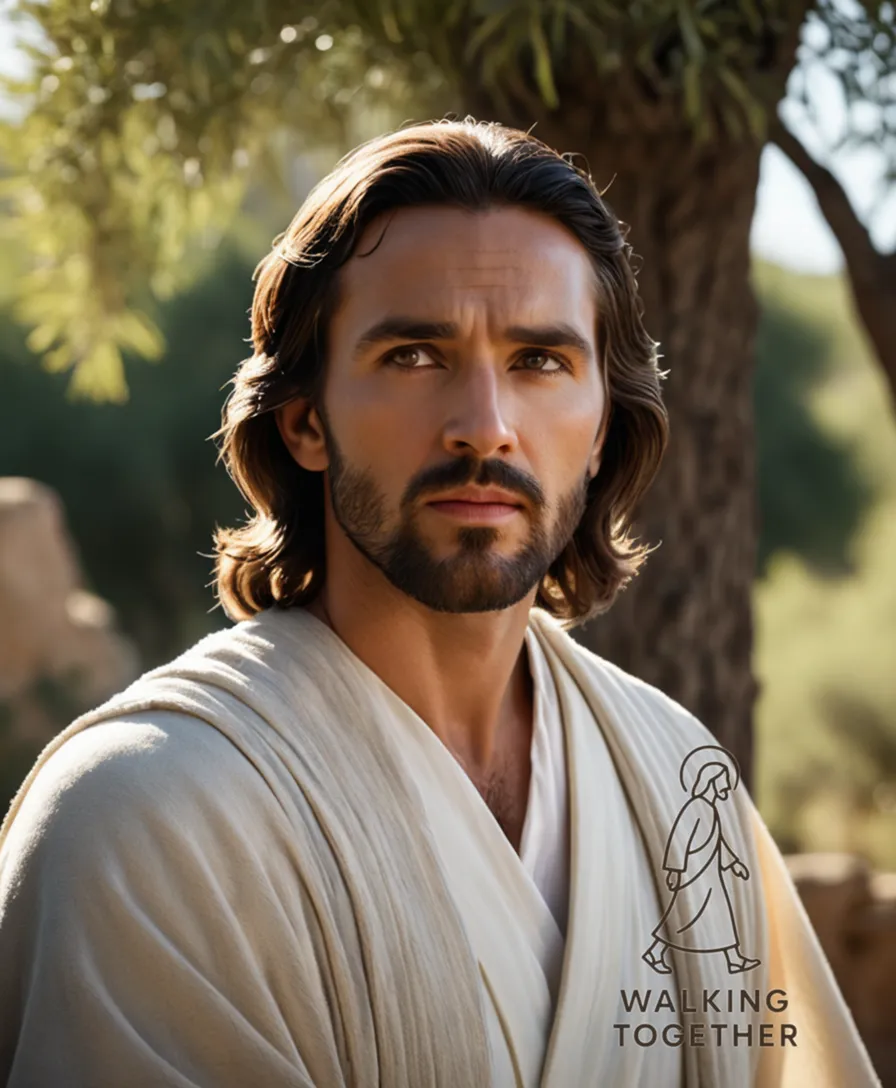
Is your soul aching for something more, something real, something enduring? Are you tired of the endless striving, the masks, the gnawing emptiness that even your greatest achievements cannot fill?
What if the deepest longing you’ve ever felt is actually a clue, a compass pointing you toward the very truth your heart desperately seeks?
Consider this: if the gospel of Jesus Christ explained is indeed the answer to humanity’s profound brokenness, what resistance within you prevents you from exploring its claims with an open heart? What pride, what fear, what past hurt is whispering lies, keeping you chained to a path that isn’t truly bringing you life?
Could it be that the very thing you’ve dismissed as irrelevant or archaic is precisely the missing piece that could reorient your entire existence, offering a peace and purpose you never imagined possible?
Take a moment. Breathe. And honestly ask yourself: Am I willing to lay down my defenses, my preconceived notions, and simply consider that this ancient story might be the most urgent and personal truth I’ve ever encountered? The invitation is not to perfect yourself, but to surrender your imperfections to a Love that already knows them all, and chooses you anyway. What would it look like for you to truly trust in such a love?
Powerful conclusion
The gospel of Jesus Christ explained is not merely doctrine; it is the pulsing heart of eternity, beating for us in our brokenness. It is the story of a God who loves us too much to leave us lost, a rescuer who paid a price we could never afford, and an invitation to a life more abundant and meaningful than any we could construct for ourselves. It demands everything and gives infinitely more in return. It is the ultimate truth that frees us to be truly human, truly loved, truly whole. May we find the courage to lean into its radical embrace, for in its embrace, we finally find our way home.
Frequently Asked Questions (FAQ)
Is the gospel of Jesus Christ only for religious people?
Absolutely not. The gospel is not an exclusive club for the ‘pious.’ It’s a desperate lifeline for the lost, the broken, the hurting—which, in truth, is every single one of us, regardless of our religious background or lack thereof. It’s for the person who feels utterly alone, the one weighed down by guilt, and the one searching for meaning beyond the mundane.
Isn’t it just a way to control people or make them feel guilty?
While some religious institutions might have misused its message, the true heart of the gospel is about liberation, not control, and redemption, not condemnation. It shines a light on our brokenness not to shame us, but to show us how much we need a savior and how much God loves us despite our flaws. It’s an invitation to freedom from the control of sin and self.
What if I’ve done too many bad things to be forgiven?
This is a deeply human fear, but it utterly misses the point of grace. The gospel proclaims that Jesus’ sacrifice is sufficient for ALL sin – past, present, and future. There is no ‘too bad’ for God’s forgiveness. His love and mercy are vast beyond our comprehension, able to cleanse the deepest stains and heal the most profound wounds. Your past does not define your eligibility for His grace.
Does believing in Jesus mean I have to be perfect from now on?
No. The gospel isn’t a call to instant perfection; it’s an invitation to a transformative relationship that will, over time, reshape you. It’s about being declared righteous in God’s eyes because of what Jesus did, and then living a life of grateful response, empowered by His Spirit to grow in holiness. It’s a journey of continuous learning, stumbling, and getting back up, all under the umbrella of His unending grace.
How do I even begin to understand or experience this gospel?
You begin by acknowledging your need, by opening your heart to the possibility that God is real and that His love for you is personal and profound. It involves a simple, heartfelt prayer of surrender: confessing your brokenness, asking for His forgiveness, and inviting Jesus Christ to be the Lord of your life. It’s a leap of vulnerable faith, trusting Him with all your uncertainties. Start with an honest conversation from your heart to His, and let Him meet you there
Starting on this path of deeper connection is about vulnerability and sincerity. Perhaps it’s finding comfort in knowing that even amidst the complexities of life, there’s someone who always meets you where you are, offering support and understanding. This openness resonates deeply with historical accounts, even those seemingly unrelated to our modern struggles. Think, for instance, of jesus tree service, an early ministry that sought to bring life and sustenance to barren communities through both physical labor and spiritual guidance.
.