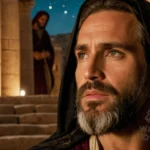
Isaiah Predicting Jesus: Unveiling Messianic Prophecies

The historical and theological concept of Isaiah predicting Jesus stands as a cornerstone in the study of biblical prophecy and its fulfillment. For many, understanding what is Isaiah predicting Jesus involves delving into one of the most significant collections of ancient texts that purportedly foretell the advent, life, and mission of Jesus Christ centuries before his birth
For many, understanding what is Isaiah predicting Jesus involves delving into one of the most significant collections of ancient texts that purportedly foretell the advent, life, and mission of Jesus Christ centuries before his birth. This tradition of interpreting prophetic scripture finds expression in various ways, including through festive imagery like the jesus is the reason for the season banner, a popular design reflecting centuries of theological discourse.
. This subject is not merely an academic exercise but holds profound relevance today, serving as a foundational pillar for Christian theology and a significant point of discussion in interfaith dialogue. In contemporary discourse, scholarly analysis continues to explore the intricate layers of these prophecies, examining their historical context, linguistic nuances, and diverse interpretations across various religious traditions. The ongoing engagement with Isaiah’s writings provides a rich tapestry for comprehending the roots of messianic expectation and its enduring impact on global religious thought.
The Historical Context of Isaiah’s Prophecies
To fully appreciate the scope of Isaiah predicting Jesus, it is essential to situate the prophet and his writings within their original historical and political milieu. The Book of Isaiah is a complex prophetic work, traditionally attributed to the prophet Isaiah, son of Amoz, who prophesied in the Kingdom of Judah during the 8th century BCE. This period was marked by significant political instability, social upheaval, and moral decay.
Who Was Isaiah?
Isaiah, whose name means “Yahweh is salvation,” was a prominent figure in Jerusalem, believed to be a royal prophet or a man of noble birth. He served during the reigns of four Judean kings: Uzziah, Jotham, Ahaz, and Hezekiah. His ministry spanned several decades, a time when the Assyrian Empire was rapidly expanding its influence, posing an existential threat to Judah. Isaiah delivered powerful messages of judgment against the sin and idolatry of his people, while simultaneously offering hope through prophecies of a future restoration and the coming of a divine king or messiah. His prophecies are characterized by vivid imagery, poetic language, and profound theological depth, addressing both immediate historical events and distant eschatological hopes. The literary quality and theological richness of his work have cemented its place as one of the most influential books in the Hebrew Bible.
The Political and Religious Landscape of Judah
During Isaiah’s time, the Kingdom of Judah was caught between the formidable Assyrian superpower and the declining regional powers of Egypt and other smaller nations. Kings like Ahaz and Hezekiah faced immense pressure to form alliances or resist the Assyrians, often leading to decisions that contradicted prophetic counsel. Religiously, the nation was plagued by syncretism, social injustice, and a general turning away from the covenant with God. Isaiah relentlessly called the people back to faithfulness, emphasizing God’s sovereignty, holiness, and unwavering commitment to His promises. Amidst warnings of impending exile and destruction, Isaiah introduced transformative visions of a future ideal king, a Messiah, who would bring justice, peace, and salvation not only to Israel but to all nations. These prophecies offered a beacon of hope in a dark era, promising divine intervention and the establishment of an everlasting kingdom.
Key Messianic Prophecies in Isaiah
The core of Isaiah predicting Jesus lies within specific passages of the Book of Isaiah that are traditionally interpreted as foretelling the characteristics and mission of the Messiah. These prophecies are cited extensively in the New Testament to demonstrate Jesus’s fulfillment of ancient expectations.
The Virgin Birth (Isaiah 7:14)
One of the most widely discussed prophecies is found in Isaiah 7:14, which states: “Therefore the Lord himself will give you a sign: The virgin will conceive and give birth to a son, and will call him Immanuel.” This prophecy emerged in a moment of national crisis when King Ahaz of Judah was terrified by a confederacy of Aram and Israel. Isaiah offered a sign of God’s protection, promising the birth of a child named Immanuel, meaning “God with us.” Christian theology interprets this as a direct prediction of Jesus’s birth to the Virgin Mary, as recorded in Matthew 1:23, highlighting the divine nature of Christ. The term “virgin” (Hebrew: almah) has been a subject of extensive scholarly debate, with some arguing for a broader meaning of “young woman,” while Christian tradition consistently upholds the interpretation of a miraculous virgin conception. Regardless of the linguistic nuances, the theological significance of this passage for understanding Isaiah predicting Jesus remains paramount.
The Suffering Servant (Isaiah 53)
Perhaps the most poignant and detailed prophecy concerning Jesus is found in Isaiah 53, often referred to as the “Suffering Servant” passage. This chapter describes a figure who willingly undergoes immense suffering, humiliation, and death, not for his own sins, but as an atoning sacrifice for the transgressions of others. The servant is “despised and rejected by mankind, a man of suffering, and familiar with pain” (Isaiah 53:3), who “bore our infirmities and carried our sorrows” (Isaiah 53:4). His death is portrayed as a substitutionary sacrifice, bringing healing and peace to those for whom he suffered. Christian exegesis universally identifies this Suffering Servant with Jesus Christ, whose crucifixion is seen as the ultimate fulfillment of this prophecy. The detailed description of the servant’s unjust trial, silent endurance, and sacrificial death resonates profoundly with the Gospel accounts of Jesus’s passion. This prophecy is central to the Christian understanding of atonement and redemption, making it a pivotal component of Isaiah predicting Jesus.
The Prince of Peace (Isaiah 9:6-7)
Another significant messianic prophecy in Isaiah speaks of a future king who will reign with justice and peace. Isaiah 9:6-7 declares: “For to us a child is born, to us a son is given, and the government will be on his shoulders. And he will be called Wonderful Counselor, Mighty God, Everlasting Father, Prince of Peace. Of the greatness of his government and peace there will be no end. He will reign on David’s throne and over his kingdom, establishing and upholding it with justice and righteousness from that time on and forever. The zeal of the Lord Almighty will accomplish this.” This prophecy presents a stark contrast to the turbulent times of Isaiah, envisioning an ideal ruler whose reign would bring eternal peace and justice. The titles attributed to this child, particularly “Mighty God” and “Prince of Peace,” underscore his divine nature and his role as a bringer of universal harmony. Christian theology interprets this passage as a direct prophecy of Jesus’s birth, seeing him as the promised Davidic king who establishes an everlasting kingdom of peace and righteousness. It highlights the divine authority and redemptive purpose central to the Christian understanding of Jesus.
The Root of Jesse (Isaiah 11:1-2)
Isaiah 11:1-2 speaks of a future leader arising from the lineage of Jesse, King David’s father: “A shoot will come up from the stump of Jesse; from his roots a Branch will bear fruit. The Spirit of the Lord will rest on him—the Spirit of wisdom and of understanding, the Spirit of counsel and of might, the Spirit of the knowledge and fear of the Lord.” This prophecy offers hope amidst the metaphor of a felled tree, symbolizing the fallen dynasty of David. From its “stump,” a new “shoot” or “branch” will emerge, signifying a renewed lineage and a future king endowed with divine wisdom and the Spirit of God. Christian interpretations identify this “shoot” or “branch” (Hebrew: netzer or tsemach) with Jesus, who is depicted in the New Testament as a direct descendant of David (Matthew 1:1; Luke 3:31-32). This prophecy emphasizes Jesus’s rightful claim to the Davidic throne and his role as a just and Spirit-filled ruler, fulfilling the ancient covenant promises made to David. It underscores the connection between the Old Testament expectations and the person of Jesus, providing further evidence for Isaiah predicting Jesus.
Insight Block: The convergence of prophecies in Isaiah – spanning the miraculous birth, the sacrificial suffering, the divine kingship, and the Davidic lineage – paints a remarkably coherent picture that, for Christian believers, finds its ultimate and precise fulfillment in the person of Jesus Christ. This detailed predictive power is often cited as compelling evidence for the divine inspiration of scripture.
Interpretations and Fulfillment in the New Testament
The concept of Isaiah predicting Jesus is not merely a modern theological construct but is deeply embedded in the earliest Christian writings. The authors of the New Testament frequently reference Isaiah to validate Jesus’s messianic claims and to explain the significance of his life, death, and resurrection.
New Testament Authors’ Perspective
The apostles and evangelists consistently presented Jesus as the fulfillment of Old Testament prophecies, with Isaiah being a particularly prominent source. For example, Matthew’s Gospel explicitly cites Isaiah 7:14 regarding the virgin birth (Matthew 1:23) and Isaiah 9:1-2 concerning Jesus’s ministry in Galilee (Matthew 4:15-16). Mark’s Gospel alludes to Isaiah’s prophecies about a messenger preparing the way for the Lord (Mark 1:2-3, referencing Isaiah 40:3). Luke’s Gospel records Jesus himself reading from Isaiah 61:1-2 in the synagogue at Nazareth, declaring that the scripture was fulfilled in their hearing (Luke 4:17-21). Perhaps most significantly, the apostle Peter and the early Christian community extensively utilized Isaiah 53 to interpret Jesus’s suffering and crucifixion as a sacrificial atonement for sins (Acts 8:32-35; 1 Peter 2:21-25). This consistent application by the New Testament authors underscores their conviction that Isaiah predicting Jesus was not a matter of coincidence but a deliberate divine plan unfolding through history. They saw Jesus as the embodiment of these ancient hopes, providing a powerful narrative for their message.
Rabbinic and Christian Interpretations
The interpretation of Isaiah’s messianic prophecies has historically diverged between Jewish and Christian traditions. In Rabbinic Judaism, while the concept of a Messiah is central, the Suffering Servant passages (Isaiah 53) are generally not interpreted as referring to an individual Messiah who would suffer and die. Instead, some rabbinic commentaries interpret the servant as the nation of Israel itself, suffering for the sins of the world, or as an ideal righteous individual within Israel. Other interpretations suggest the suffering applies to a specific historical figure or a future messianic era of redemption without a suffering aspect. The titles in Isaiah 9:6-7, such as “Mighty God,” are understood within a monotheistic framework that does not imply divine incarnation.
Conversely, Christian theology maintains that the detailed descriptions in Isaiah, particularly regarding the virgin birth, the specific titles, the Davidic lineage, and especially the vicarious suffering of the servant, are so precise and distinctive that they could only refer to Jesus of Nazareth
This emphasis on fulfillment of prophecy is central to Christian understanding, with passages within Isaiah being particularly significant. For instance, scriptures on resurrection of jesus christ delve into various prophetic details pointing towards a coming Messiah who would suffer and provide redemption. This meticulous alignment between prophecy and historical events, Christians argue, forms irrefutable evidence for the divinity of Jesus Christ.
. The New Testament explicitly links these prophecies to Jesus, forming the bedrock of Christian apologetics and doctrinal understanding. For Christians, the fulfillment of these prophecies in Jesus provides compelling evidence of his divine identity and messianic role. The differences in interpretation highlight the distinct theological frameworks through which these ancient texts are understood, yet for Christians, the coherence of Isaiah predicting Jesus remains a central tenet.
Theological Significance and Impact

The phenomenon of Isaiah predicting Jesus holds immense theological significance, shaping fundamental Christian doctrines and influencing the trajectory of religious thought for millennia. Its impact extends beyond mere historical curiosity, deeply embedding itself within the core beliefs of millions.
Foundation of Christian Belief
For Christians, Isaiah’s prophecies about Jesus are not merely interesting historical predictions but form a crucial part of the foundation of their faith. They serve several vital functions:
* Validation of Jesus’s Identity: The precise and numerous prophecies lend credibility to Jesus’s claims of being the Messiah, demonstrating that his arrival was not random but part of a long-foretold divine plan. This provides an external, objective validation for his messianic role.
* Understanding Jesus’s Mission: The prophecies, particularly the Suffering Servant in Isaiah 53, explain why Jesus had to suffer and die. They reveal the theological necessity of his atoning sacrifice for the sins of humanity, transforming what might seem like a tragic end into a redemptive act in accordance with divine will.
* Continuity between Old and New Testaments: Isaiah’s predictions bridge the gap between the Old Testament expectations and the New Testament fulfillment. They demonstrate a seamless continuity in God’s redemptive plan, showing that the God of Israel is the same God who sent Jesus Christ. This underscores the unity of the biblical narrative.
* Basis for Hope: The prophecies offer profound hope, not only for ancient Israel but also for believers today. They speak of a future kingdom of peace, justice, and righteousness under the reign of the Messiah, providing assurance of God’s ultimate victory over evil and suffering.
This foundational role means that any exploration of what is Isaiah predicting Jesus quickly moves from a historical question to a deeply theological one, affirming God’s intentionality and foreknowledge in human history.
Enduring Relevance in Modern Theology
Even in the contemporary era, the study of Isaiah predicting Jesus remains highly relevant for modern theology and spiritual practice.
* Apologetics and Evangelism: The fulfillment of Isaiah’s prophecies continues to be a powerful argument for the truth of Christianity. The ability of ancient texts to so accurately describe future events is a compelling point for those seeking evidence for faith, making it a key tool in apologetics and evangelism.
* Biblical Interpretation: Scholarly and devotional studies of Isaiah contribute to a deeper understanding of biblical hermeneutics—the art and science of interpreting scripture. The nuanced ways in which prophecies are interpreted and applied inform broader approaches to understanding the Bible as a whole.
* Spiritual Formation: For individual believers, contemplating the detailed prophecies and their fulfillment can deepen faith and appreciation for God’s wisdom and sovereign plan. It encourages a sense of wonder and trust in divine providence, reinforcing the idea that God is active in human affairs.
* Interfaith Dialogue: Discussions surrounding Isaiah’s messianic prophecies are central to interfaith dialogue between Christians and Jews. Understanding the different interpretive frameworks fosters respectful conversation and mutual understanding, even amidst fundamental theological disagreements.
The enduring power of these ancient texts to shape belief, inform scholarly debate, and inspire spiritual reflection underscores the timeless significance of Isaiah predicting Jesus in the fabric of religious history and contemporary faith.
Common Misconceptions and Scholarly Debates
While the assertion of Isaiah predicting Jesus is central to Christian theology, various interpretations and scholarly discussions exist. Addressing these helps to provide a comprehensive and balanced understanding of the topic.
The Nature of Prophecy
One common misconception revolves around the nature of biblical prophecy itself. Some assume that prophecy must be an exact, word-for-word prediction of a singular future event with no immediate context. However, biblical prophecy, particularly in Isaiah, often operates on multiple levels:
* Immediate Historical Fulfillment: Many prophecies first addressed contemporary events or individuals in Isaiah’s own time. For example, the Immanuel prophecy in Isaiah 7:14 might have had an immediate fulfillment in a child born during Ahaz’s reign, while simultaneously carrying a deeper, future messianic significance.
* Typological Fulfillment: This concept suggests that earlier events, persons, or institutions (types) prefigure later, greater realities (antitypes). Jesus is seen as the ultimate antitype, fulfilling the “type” of the suffering servant or the ideal Davidic king in a more profound way than any historical figure could.
* Conditional Elements: Some prophecies in the Bible are conditional, dependent on human response. While messianic prophecies tend to be absolute in their certainty, understanding this broader context of prophecy helps to appreciate the complexity of divine foreknowledge and human agency.
* Poetic and Symbolic Language: Isaiah’s prophecies are often couched in rich, poetic, and symbolic language, not always literal or prosaic. Interpreting them requires an understanding of ancient Near Eastern literary conventions and the use of metaphor, simile, and hyperbole.
Recognizing these nuances in the nature of prophecy helps clarify that Isaiah predicting Jesus is often understood as a layered fulfillment, not just a simple, one-to-one correspondence for every detail, but a consistent thematic and spiritual alignment.
Dating and Authorship Discussions
Another area of scholarly debate concerns the dating and authorship of the Book of Isaiah. While traditionally attributed to a single prophet, Isaiah, son of Amoz, critical scholarship has often proposed a “Deutero-Isaiah” (chapters 40-55) and “Trito-Isaiah” (chapters 56-66), suggesting that these sections were written by different authors during or after the Babylonian exile (6th-5th centuries BCE).
* Unitary Authorship View: Proponents of unitary authorship argue that the book’s theological coherence, linguistic similarities, and explicit statements within the text support a single author, with God revealing future events to Isaiah. They suggest that the shift in style and subject matter can be explained by Isaiah’s prophetic vision extending across different time periods.
* Multiple Authorship View: Scholars who advocate for multiple authors point to distinct shifts in vocabulary, literary style, and historical context between the different sections. They argue that a prophet writing in the 8th century BCE would not have addressed events like the Babylonian exile or the Persian king Cyrus in such detail.
This debate impacts how one approaches Isaiah predicting Jesus. If parts of Isaiah, particularly chapters like 53, were written closer to the time of Jesus, some might argue they are less “predictive” and more reflective or interpretative of contemporary messianic expectations. However, even with multiple authorship, the Christian position maintains that the inspiration of the text and its ultimate fulfillment in Jesus remain consistent. For believers, the prophetic nature of the entire book, regardless of the precise number of human authors, points to a divine hand guiding the message, ultimately revealing the Christ. The historicity of the predictions, even if spread across different periods of composition, is seen as part of a larger, divinely orchestrated unfolding of messianic truth.
Isaiah’s Prophecies: Enduring Insights and Future Reflection
Understanding what is Isaiah predicting Jesus offers far more than a simple historical survey; it provides profound insights into the nature of divine revelation and humanity’s enduring quest for redemption. The detailed prophecies found within the Book of Isaiah, spanning centuries before the birth of Christ, remain a compelling testament to a grand narrative of divine purpose. From the promise of Immanuel to the vivid depiction of the Suffering Servant, Isaiah paints a consistent picture of a coming Messiah whose life, death, and reign would reshape human history and theological understanding.
The exploration of these ancient texts compels us to reflect on the deep interconnections between the Old and New Testaments, illustrating a seamless unfolding of God’s plan. For countless individuals and communities, these prophecies solidify Jesus’s identity as the Christ, confirming his role as the fulfillment of long-held hopes and expectations. As we delve into the textual nuances, historical contexts, and diverse interpretations, we gain a richer appreciation for the complexity and profundity of biblical prophecy. The enduring relevance of Isaiah’s words invites continuous study, prompting us to consider how these ancient insights continue to inform contemporary faith, theological discourse, and the very foundations of Christian belief. Reflecting on what is Isaiah predicting Jesus ultimately challenges us to engage more deeply with the biblical narrative and its transformative power.
Frequently Asked Questions

Q: Was Isaiah the only prophet who predicted Jesus?
A: No, while Isaiah is particularly prominent for his detailed messianic prophecies, other Old Testament prophets such as Micah (predicting Bethlehem as birthplace), Zechariah (predicting donkey entry, pierced hands/feet), and David (in the Psalms, foreshadowing suffering) also offered prophecies understood by Christians as foretelling aspects of Jesus’s life.
Q: Do all scholars agree on the interpretation of Isaiah’s prophecies?
A: No, interpretations of Isaiah’s prophecies, especially regarding messianic fulfillment, vary significantly between Jewish and Christian scholars. While Christians see direct fulfillment in Jesus, many Jewish scholars interpret these prophecies in collective, historical, or non-individual messianic terms, or as applying to an ideal righteous figure or the nation of Israel.
Q: How do these prophecies influence modern Christian faith?
A: Isaiah’s prophecies deeply influence modern Christian faith by providing foundational evidence for Jesus’s identity as the Messiah, affirming the divine inspiration of scripture, and offering a robust framework for understanding salvation through Jesus’s suffering and resurrection. They reinforce a sense of continuity in God’s redemptive plan.
Q: When was the Book of Isaiah written?
A: Traditionally, the Book of Isaiah is attributed to the prophet Isaiah who ministered in Judah during the 8th century BCE. However, critical scholarship often proposes that the book is a composite work, with different sections (Proto-Isaiah, Deutero-Isaiah, Trito-Isaiah) written by different authors across the 8th to 5th centuries BCE.
Q: Are there specific verses often cited for “Isaiah predicting Jesus”?
A: Yes, the most frequently cited verses include Isaiah 7:14 (virgin birth, Immanuel), Isaiah 9:6-7 (child called Prince of Peace, Mighty God), Isaiah 11:1-2 (shoot from Jesse, Spirit of the Lord), and critically, Isaiah 53 (the Suffering Servant who atones for sins). These passages form the core of Christian understanding regarding Isaiah’s messianic prophecies
These passages form the core of Christian understanding regarding Isaiah’s messianic prophecies, emphasizing the role of a future king and savior who will bring peace and justice. It’s fascinating to explore how other faith traditions interpret these same verses. For example, Islam believe in jesus offers a distinct perspective on the significance of Jesus within their belief system, seeing him as a prophet but not divine.
.