
The Echo in Your Soul: How Do I Know If I Believe in Jesus?

Let’s tear down the comfortable illusions, the polite nods, and the spiritual platitudes. The question that truly gnaws at the soul, the one whispered in the dead of night when doubt feels like a cold hand on your heart, is profoundly simple yet utterly terrifying: how do I know if I believe in Jesus? This isn’t a sterile theological debate; this is a raw, agonizing quest for truth within your own marrow
This agonizing search often leads us to grapple with questions about the meaning of Jesus’ name itself. What does it truly signify, and how does that understanding shape our faith? The name of jesus bible study offers a fascinating exploration into this very topic, delving into the rich historical and theological weight behind the name that has resonated through centuries.
. It’s not about checking boxes on a doctrinal list or reciting ancient creeds you might not fully grasp. It’s about a visceral, undeniable resonance, a haunting pull that demands more than mere intellectual assent. It’s about the tremor in your spirit when His name is spoken, the silent, desperate plea for grace when you’re utterly broken. If you’ve ever stared into the void of your own uncertainty, if you’ve ever felt the profound ache of wanting to believe, to truly believe, then you know this isn’t just an inquiry – it’s a cry for salvation, a desperate grasp for a lifeline in the churning seas of existence. It’s the courageous admission that something deeper than logic demands an answer, a truth that transcends the tangible and reaches for the eternal. This isn’t a journey for the faint of heart, but for those brave enough to confront the most intimate questions of their existence.
Context and Depth
The Ache of Unknowing: Why Certainty Eludes Us
We live in a world that craves certainty, yet often offers only fleeting illusions of it. From the relentless march of scientific discovery to the curated narratives of social media, we are conditioned to seek definitive answers, measurable outcomes, and irrefutable proofs. But faith, by its very nature, often resists such neat packaging. The ache of unknowing, therefore, becomes a profound source of spiritual angst. It’s the conflict between a mind trained to dissect and analyze, and a heart that longs for something boundless, something that can’t be fully contained within human reason.
Socially, the pressure is immense. In some circles, there’s an expectation of a flawless, unwavering faith, a performance of piety that leaves no room for struggle. To admit doubt can feel like a betrayal, a sign of weakness or spiritual failure. Culturally, we’re bombarded with conflicting narratives: fervent revivalism on one hand, aggressive secularism on the other. Navigating this landscape feels like walking a tightrope, desperately trying to maintain balance while voices from all sides demand your allegiance or dismiss your longing. Ethically, we grapple with the complexities of historical religious actions, the perceived contradictions in sacred texts, and the suffering endured by so many in a world supposedly overseen by a loving God. These external pressures intertwine with deeply personal struggles: past traumas that make trust difficult, intellectual skepticism honed by years of critical thinking, or simply the sheer weight of life’s unanswered questions. This isn’t about weak faith; it’s about the very real, very human struggle to reconcile the infinite with the finite, the divine with the deeply flawed. The fear isn’t just of being wrong; it’s the deeper fear of being alone in that wrongness, of being cut off from a truth you desperately hope exists.
Culture’s Conflicting Whispers: Faith in a Skeptical Age
Our modern age, for all its technological marvels and advancements, is also an era steeped in profound skepticism, particularly towards matters of faith. Science often presents a compelling, empirically verifiable account of the universe, challenging traditional creation narratives and supernatural claims. The voices of atheism and agnosticism are loud and articulate, often highlighting the historical missteps, hypocrisies, and dogmatic rigidities of organized religion. This creates an environment where expressions of faith can feel anachronistic, even naive.
Culturally, popular media often portrays believers in one of two extreme ways: either as naive, simple-minded conformists, or as dangerous, fanatical zealots. Rarely do we see the nuanced, thoughtful, struggling, yet deeply committed individual whose faith is a wellspring of compassion and purpose. This pervasive framing makes it incredibly difficult for many to even consider aligning themselves with “religion,” let alone actively exploring a belief in Jesus. The ethical dimensions are equally challenging. The painful legacy of religious wars, inquisitions, and systemic injustices committed in the name of God casts a long shadow. How does one reconcile a benevolent, all-powerful deity with the immense suffering and moral failings of humanity, especially those perpetrated by His supposed followers? These cultural and ethical whispers create a cacophony, a constant barrage of counter-arguments and critiques that can drown out any nascent spiritual inclination, making the path to belief feel fraught with intellectual and moral hurdles. It is a lonely journey to seek the sacred when the world around you champions the secular.
Beyond the Creed: The Heart’s Own Language
The true measure of belief in Jesus rarely resides solely in the meticulous recitation of a creed or the intellectual assent to a historical narrative. While doctrine provides a framework, the essence of faith speaks a far older, far more intimate language – the language of the heart. This isn’t to dismiss theology, which is vital for understanding and grounding our faith, but to emphasize that belief is ultimately a relational and experiential phenomenon, not just a cognitive one. You can believe about Jesus – that He existed, that He taught certain things, that He died on a cross – without truly believing in Him, without yielding your life to His transformative power.
The heart’s language is one of yearning, of quiet surrender, of a profound recognition of need that transcends words. It’s the felt presence in moments of desolation, the inexplicable peace in the face of chaos, the whisper of grace that reminds you of your inherent worth, even in your deepest failures. This form of belief isn’t static; it’s a living, breathing entity that evolves, deepens, and is perpetually tested. It’s a journey, not a destination, marked by seasons of fervent connection and periods of perplexing distance. It demands a posture of vulnerability, a willingness to admit that you don’t have all the answers, and that the greatest truths might lie beyond the grasp of pure intellect. It’s about trusting an unseen hand, not because you’ve exhaustively proven its existence, but because its touch brings solace and direction to a weary soul. This is the radical humility that precedes genuine faith, the quiet space where the heart begins to speak its own truth, beyond the clamor of the world and the strictures of mere formality.
Main Emotionally Charged Arguments
The Undeniable Resonance of Grace
Belief isn’t just a mental calculation, a logical proof accepted in the cold light of reason. It’s more like a profound, undeniable resonance deep within your bones, a chord struck in the quiet chambers of your soul that reverberates with truth, even when your mind is screaming doubts. It is the unbidden sense of a homecoming, like finding water in a parched desert, a sudden, inexplicable sense of belonging that washes over you. You might not have the theological vocabulary to articulate it, or the historical arguments to defend it, but a part of you simply knows. It feels like the ache for something you didn’t know was missing, now being gently, yet firmly, acknowledged.
This isn’t about discarding reason, but recognizing its limits in matters of the spirit. You can intellectually accept the historical facts of Jesus’s life, His crucifixion, His resurrection, and still feel nothing, still remain untouched by His claim on your life. True belief goes beyond these facts to a felt experience, a spiritual awakening where His story becomes your story, His sacrifice deeply personal. The dilemma then becomes: how do you explain this feeling, this internal knowing, to someone who only seeks empirical evidence? How do you trust it yourself when your rational mind falters, when the world demands proof? The answer lies not in articulating it perfectly, but in leaning into the experience itself. It’s the quiet reassurance in prayer, the unexpected wisdom gleaned from scripture, the surge of compassion for a stranger, all of which feel like whispers from a source beyond yourself. It’s the profound, humbling awareness of grace – undeserved love and mercy – that settles into your spirit and makes you feel truly seen, truly known, and truly loved. This resonance is the living water quenching a thirst you didn’t fully comprehend, the light piercing a darkness you had grown accustomed to.
The Uncomfortable Mirror of Transformation
If you genuinely believe in Jesus, something fundamental within you shifts. Not always a sudden, dramatic lightning bolt experience, though for some it is, but often a quiet, persistent turning, a subtle recalibration of your inner compass. You find yourself striving for kindness where once there was bitterness, seeking forgiveness where once there was resentment. You begin to crave justice for the oppressed, even when it costs you comfort
This yearning for justice becomes a defining characteristic of belief, a constant pull towards righteousness even in the face of hardship.
It’s a path laid out centuries ago by figures like Jesus, who explicitly challenged societal norms and advocated for the vulnerable. Exploring those teachings through jesus chat with us offers a glimpse into how faith can be both deeply personal and a powerful catalyst for societal change.
. The mirror reflects not just your inherent flaws, your persistent weaknesses, but also a burgeoning desire for something purer, something more aligned with love and compassion, with selfless service and unwavering truth. This transformation isn’t about instant perfection, but about the profound directionality of your life.
This is where faith becomes tangible, where it moves from abstract thought to lived reality. It’s the impulse to serve the unnoticed, to speak truth to power, to endure hardship with a deeper hope than mere optimism. The contradiction arises when we believe ourselves to be believers, yet our actions betray a heart still clinging to old habits, still mired in selfishness or judgment. This is the uncomfortable mirror: the gap between aspiration and reality. The real dilemma is faced daily: what about failure? What about the times when you don’t live up to the ideals of Christ, when you stumble, when you succumb to temptation, when you hurt others? Is that proof of unbelief, or simply proof of your undeniable humanity? It is the latter. It is proof of the ongoing process of sanctification, a continuous reliance on grace, a daily turning back towards the source of your faith. True belief manifests not in flawless performance, but in the persistent, humble pursuit of Christ-likeness, in the willingness to acknowledge your failings and seek repentance, to extend grace to yourself as readily as you extend it to others. It’s about the consistent longing for a purer heart, a more loving spirit, and the courage to keep striving, even when you fall.
The Vulnerable Embrace of a Living Relationship
To truly believe in Jesus is to enter into a relationship, not merely to subscribe to a philosophy or adhere to a set of rules. It’s an ongoing, often messy, deeply intimate dialogue with a living presence, not a historical figure confined to ancient texts. It’s calling out to Him in your deepest despair and finding a subtle comfort that no human reassurance can provide. It’s recognizing His voice not only in sacred scripture but in the counsel of wisdom offered by a friend, in the quiet urging towards goodness, in the unexpected beauty of a sunrise, or the profound peace found in stillness. This relationship is characterized by vulnerability, by the courage to lay bare your fears, your inadequacies, your unspoken longings before a God who sees you completely and loves you anyway.
This is the very essence of faith: trusting in the love and presence of someone unseen, yet profoundly felt. He becomes more than a concept; He becomes a constant companion, a trusted friend, a benevolent shepherd. The dilemma for many arises when this relationship feels distant, when prayers seem to bounce off the ceiling, when His presence feels absent in moments of acute suffering. What if you feel nothing when you pray? What if spiritual drought sets in, leaving you parched and questioning? That too is part of the relationship, the ebb and flow of any profound connection. It’s in those moments of spiritual wilderness that your commitment is truly tested, and your genuine longing affirmed. It’s not about constant euphoria, but about persistent seeking, even when feeling lost, even when doubt whispers its corrosive truths. It is the unwavering choice to show up, to keep knocking, to keep listening, to keep reaching out, demonstrating that the root of your belief is not contingent on momentary feelings, but on a steadfast commitment to a presence you know, deep down, is real and abiding. This vulnerable embrace is where belief blossoms into trust, and trust solidifies into an unbreakable bond.
Call to Reflection or Action
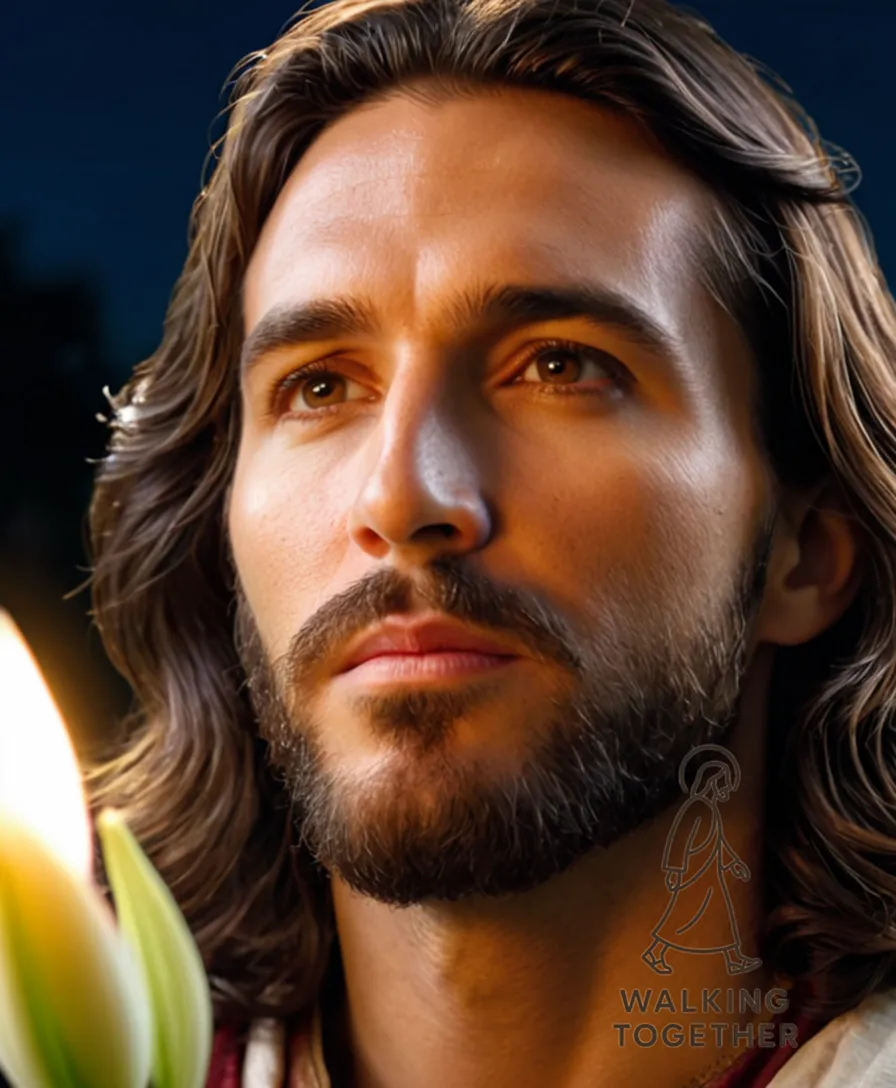
So, what does all of this mean for your aching heart, your questioning mind, your soul yearning for an anchor? It means pausing. It means listening deeply. Not for grand pronouncements, not for the booming voice from the heavens, but for the quiet whisper within, the persistent nudge towards something holy, something true. It means daring to open yourself to the possibility that belief isn’t found in dogma alone, but in an experience, in a transformative encounter, in a relationship that reshapes your very essence. The journey to answer how do I know if I believe in Jesus is intensely personal, often solitary, yet it connects you to an ancient, vibrant stream of faith that has nourished souls for millennia.
Don’t seek to merely prove; seek to experience. Don’t demand answers from the outside; listen to the stirrings within, to the undeniable resonance of grace that calls you beyond yourself. Don’t mistake intellectual struggle for spiritual failure; embrace your questions as pathways to deeper understanding. This is not a test to be passed, but a life to be lived, with eyes open to wonder, heart vulnerable to love, and spirit seeking a truth that satisfies the deepest human longing. Let your doubts be the grit that sharpens your faith, and your longing be the compass that guides you home. Dare to explore the quiet corners of your soul, for it is there that the seeds of belief often take root, blossoming into a conviction that is uniquely, powerfully yours.
Powerful Conclusion
Ultimately, belief in Jesus isn’t a static point you arrive at, but a dynamic, living journey of faith, doubt, surrender, and renewed hope. It is the courageous decision to keep walking, even when the path is shrouded in fog, trusting in the Light you have, however faintly, perceived. It is the unwavering choice to lean into grace, to wrestle with truth, and to find your anchor in the living Christ, day after tumultuous day, acknowledging that the seeking itself is a profound act of faith.
The echo you seek is already within you, if you dare to listen.
Frequently Asked Questions (FAQ)
Is doubt a sign of unbelief?
Doubt is not the opposite of faith; it is often an integral part of its journey. True belief is robust enough to wrestle with questions, to lean into uncertainty, and to emerge stronger. It’s through honest doubt that faith often deepens, moving beyond inherited dogma to personal conviction, refining what you truly hold to be true. To doubt is to engage, not to dismiss.
Do I need a dramatic conversion experience to believe?
Not at all. While some experience profound, sudden awakenings, for many, belief is a gradual unfolding, a quiet dawning, like the slow rise of the sun. The gentle stirring of the heart, the subtle shift in perspective, the growing desire for goodness – these are just as valid and powerful as any dramatic Damascus Road experience. The authenticity lies in the transformation, not the theatrics.
What if I believe intellectually but don’t feel it emotionally?
Belief often involves both the mind and the heart, but they don’t always align perfectly. If your intellect assents to the truth of Jesus, but your emotions feel distant, that’s okay. Sometimes, action precedes feeling. Engage in practices that nourish your spirit – prayer, reading scripture, serving others, contemplation – and trust that the heart will often follow where the mind and will lead, deepening your emotional connection over time.
Can I lose my belief?
Faith can certainly waver, diminish, or feel lost, especially during periods of pain, disillusionment, or spiritual dryness. But true belief, rooted in a relationship rather than just a feeling, is often resilient. It might transform, or go dormant, but the underlying connection, the seed of truth, can be reawakened. It’s less about “losing” it entirely and more about seasons of searching, questioning, and rediscovering, a testament to the dynamic nature of faith.
How does my belief impact my daily life?
Genuine belief in Jesus should profoundly influence every facet of your existence. It shapes your values, guides your decisions, informs your relationships, and provides a framework for navigating suffering and joy. It manifests as a growing compassion for others, a commitment to justice, an embrace of forgiveness, a deeper sense of purpose, and a constant striving to live a life reflective of His love and teachings in your words and deeds
This profound transformation doesn’t exist in isolation, but is deeply interwoven with Christ’s teachings on love and judgment. Recognizing the inherent dignity of every human being – a core principle illuminated by His life and ministry – inevitably compels us to strive for justice and compassion. He understood the gravity of our choices, emphasizing the importance of repentance and turning away from sin in preparation for eternity. This understanding is particularly evident in His jesus warning about hell, a message often misunderstood, yet crucial for grasping the fullness of His love and grace.
.